
Send Us A Message
What residue and labeling rules matter when exporting agricultural chemicals
When Agricultural Chemicals are exported, the two issues that most often stop a shipment are residue compliance and label compliance. Not price, not production capacity, and not even the active ingredient itself. If the residue profile does not match the destination market’s legal limits, or if the label misses one required statement, customs clearance can slow down, the consignee may refuse the goods, and the exporter can end up facing a much larger problem than a document correction. In practice, the challenge is that many teams treat these checks as final-stage paperwork. They are not. They need to be built into product review, packaging control, and shipment release from the start.
A short answer first: the rules that matter most are the destination country’s residue limits, approved-use conditions, ingredient disclosure requirements, hazard communication rules, language rules, and transport-related label elements. For Agricultural Chemicals, passing one market does not mean you are compliant in another. The same product can be acceptable in one country and blocked in another because the residue tolerance, phrase wording, or unit expression is different.
Why residue issues are not limited to food testing
One common misunderstanding is that “residue limits” only matter for food exporters. That is too narrow. For agricultural chemical exports, residue-related compliance can affect product registration, downstream use acceptance, import inspection, and claims handling after delivery.
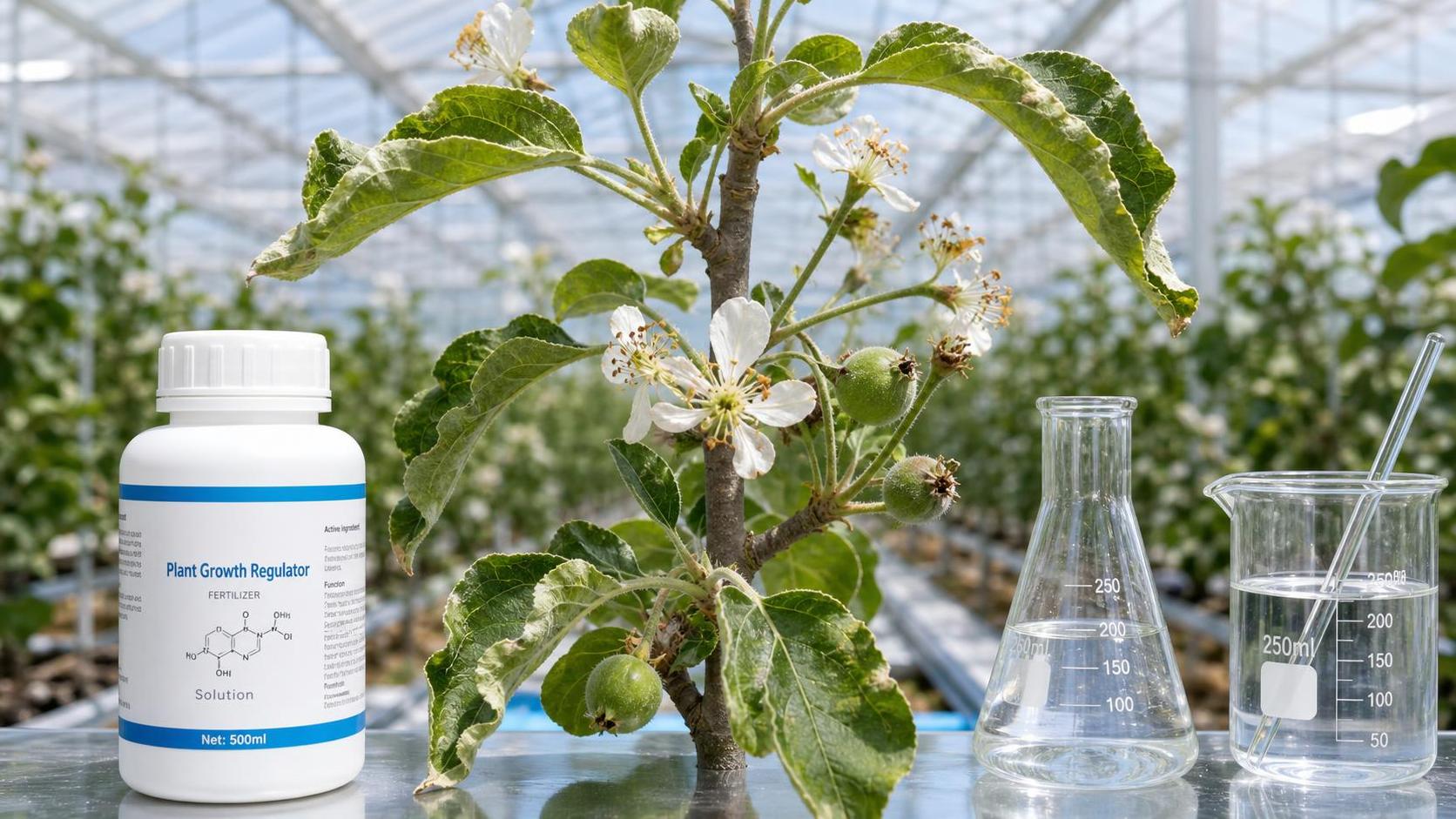
If a pesticide, plant growth regulator, or related agricultural input is exported for use on crops, the destination market may look beyond the chemical specification in the drum or bag. Regulators and importers may ask whether the product’s intended use could lead to residues above local maximum residue limits, often referred to as MRLs. Those MRLs are usually set by the importing country or region, and they may differ significantly from Chinese standards or from Codex references.
This creates a practical problem for exporters: a product can be chemically on-spec and still commercially non-viable in the target market. If the residue outcome under labeled use conditions does not fit local agricultural compliance, the buyer may have little room to use it legally.
That is why residue review should begin with three questions:
- What is the exact active substance and formulation being exported?
- On which crops, at what dosage, and in which application interval will it be used?
- What residue tolerances or import tolerances apply in the destination country?
Without those answers, a certificate of analysis alone does not tell you enough.
What “residue compliance” usually means in real export work
In day-to-day operations, residue compliance is rarely one single document. It is a combination of product data, use conditions, and destination-specific regulation. Teams often focus on assay, moisture, impurity profile, or packaging integrity, which are all important. But residue compliance brings in another layer: whether the product can be used in a way that keeps harvested crops within legal limits.
Several details are often overlooked.
First, local MRLs may be crop-specific. A substance allowed on rice may have a different limit on vegetables, fruit, or oil crops. Second, the same active ingredient may have different tolerances depending on whether it is used as a pesticide, herbicide, fungicide, or post-harvest treatment. Third, metabolites can matter. In some markets, the legal residue definition includes not only the parent compound but also certain breakdown products.
That last point causes trouble more often than many exporters expect. A product specification may control the parent active ingredient very well, but if the destination authority defines residue in a broader way, technical compliance needs a wider review. This is where quality and regulatory teams need to work together rather than handing the issue back and forth.
Where official requirements are unclear, the safer approach is to verify directly with the importer, local regulatory consultant, or the competent authority’s published database. Internal assumptions are a weak control point in export compliance.
Labeling failures are usually small on paper and expensive in practice
Label mistakes are rarely dramatic. More often, they are ordinary details that someone assumed were “close enough.” A missing hazard statement. An outdated supplier address. A label in English when the market requires the local language. A batch number format that does not match the shipping documents. None of these looks serious until the goods are inspected.
For Agricultural Chemicals, labeling usually needs to satisfy at least four layers of expectation:
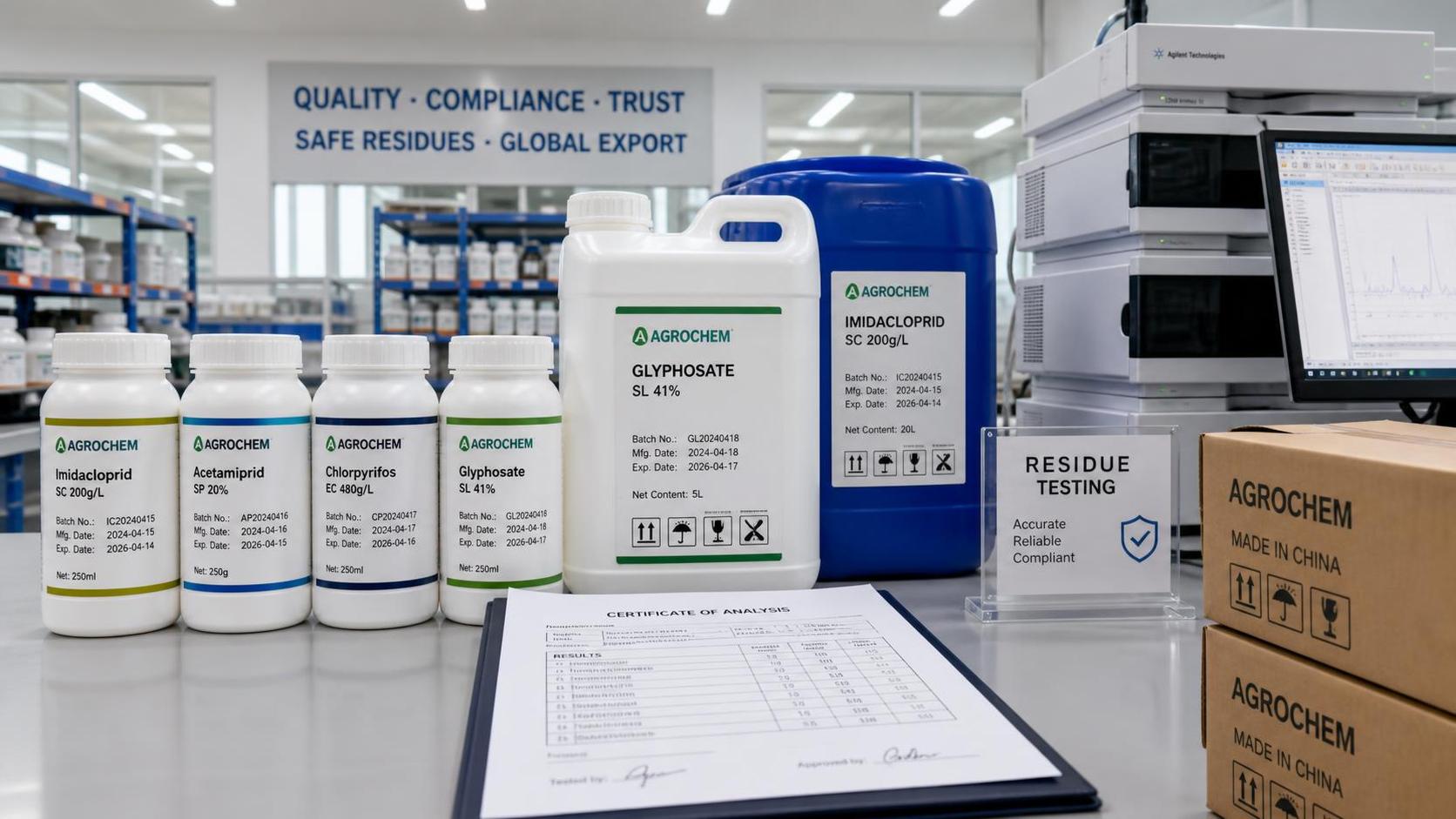
- Product identity: trade name, active ingredient name, concentration, formulation type, net content.
- Safety and hazard communication: signal words, hazard statements, precautionary statements, pictograms where required.
- Use and handling instructions: application scope, dosage, storage, first aid, disposal, incompatibilities.
- Traceability and legal information: batch number, manufacturing date, expiry or shelf-life statement where required, manufacturer or exporter details, registration or permit references if applicable.
Many teams assume that a technically correct SDS can compensate for a weak product label. It cannot. The label is the first compliance surface seen by customs, warehouse personnel, distributors, farm users, and local inspectors. If the label and SDS do not match, that inconsistency itself becomes a risk signal.
Destination rules matter more than exporter habit
This is where many otherwise capable exporters run into repeated friction. They use one label template across multiple regions and only change the consignee name or language. That works until it does not.
Some markets require local-language labels before import. Some allow supplementary stickers after arrival, but only under controlled conditions. Some require specific toxicological or environmental wording. Some require registration-holder information rather than only the manufacturer’s name. In certain cases, transport labeling under dangerous goods rules must also align with the outer packaging and shipping papers.
There is no single global label that solves all of this.
A workable method is to separate your label review into three layers:
- Core product facts that should never change unless the product changes.
- Market-specific legal text that must be checked country by country.
- Logistics and traceability fields that must match shipment documents exactly.
This sounds simple, but it removes a lot of avoidable confusion during release control.
The documents that should agree with each other
If residue and labeling review is done properly, the product label is only one piece of a larger consistency check. The following items should not contradict each other:
- Product label
- Safety Data Sheet
- Certificate of Analysis
- Technical specification
- Packing list and commercial invoice
- Dangerous goods declaration, if applicable
- Registration or import permit documents, if required by the destination market
A very typical issue is unit inconsistency. For example, concentration may be expressed one way on the label and another way on the COA or invoice. Another is identity mismatch between common name, chemical name, and CAS-based documentation. Even when each document looks individually reasonable, mismatches create doubt during review.
From a quality control standpoint, document consistency is not administrative polishing. It is part of release quality.
Where quality teams should be careful with residue claims
Some exporters or distributors like to make reassuring statements such as “low residue,” “residue-safe,” or “compliant with international standards.” These phrases sound useful, but they can create compliance exposure if they are not tied to a defined standard and actual supporting data.
Residue performance depends on dose, timing, crop, climate, formulation behavior, and local legal thresholds. So broad residue claims are often too vague to defend. A better approach is to use controlled technical language and keep supporting evidence ready. If a residue-related claim appears in product literature, marketing material, or customer communication, it should be reviewed with the same discipline as the label itself.
That is especially relevant when exporting into tightly regulated agricultural markets. In those cases, unsupported wording can become a commercial dispute even before it becomes a legal one.
Practical checks before shipment release
In actual export operations, the most reliable control is a short pre-shipment checklist tied to the destination market. Not a generic checklist used for every order, but one that reflects the product category and importing country.
At minimum, verify these points before release:
- The active ingredient and formulation are permitted or otherwise acceptable for the intended market and use.
- Any relevant residue limits or import tolerances have been checked against the intended crop or application scenario.
- The label text matches local language, mandatory wording, and legal identity requirements.
- The SDS version and label version are aligned.
- Batch, date, net content, and consignee-related data match commercial and shipping documents.
- Transport marks, UN-related information, and outer packaging labels are correct where dangerous goods rules apply.
If one of these items still depends on verbal confirmation, the file is not really ready.
In supply situations involving multiple chemical categories, the coordination burden grows quickly. That is one reason some buyers prefer working with export-focused traders that already manage compliance review across different product lines. Bohai New Materials (Tianjin) Co., Ltd., for example, works across a broad range of chemical exports and emphasizes compliant international delivery. In practice, that kind of model is most useful when customers need fewer supplier interfaces and more disciplined document coordination across shipments. It is less about promotion and more about reducing avoidable export friction.
Common mistakes that lead to rejection or delay
A few patterns show up again and again.
The first is assuming that domestic-compliant packaging text is acceptable for export. Often it is not. The second is treating translation as a final formatting task. In regulated products, translation is part of compliance, not decoration. The third is checking only the product itself but not its intended use pattern in the destination market. That is where residue-related issues often hide.
Another frequent mistake is relying on old templates. Regulations, label phrases, and importer expectations change. A label approved for one shipment last year should not be released again automatically.
And then there is the timing issue. Teams wait until production is complete before reviewing market-specific label requirements. By then, changing pre-printed packaging can be expensive, and shipment timing is already under pressure. The cleaner approach is to freeze compliance-critical text before packaging materials are finalized.
What to confirm before you promise delivery
Before confirming a delivery schedule to the customer, it is worth checking five things internally: whether the destination market has product-specific import restrictions, whether local registration or permit support is needed, whether residue expectations are linked to crop use, whether the final label language has been approved, and whether transport classification affects packaging or routing.
Those checks do not eliminate every risk. But they catch the problems that most often create rework.
For Agricultural Chemicals, the export job is not finished when the drums are sealed and the invoice is issued. The shipment needs to remain defensible all the way through customs review, local warehousing, downstream sale, and end use. Residue limits and labeling rules sit right at the center of that chain. If your team treats them as early-stage controls instead of late-stage formalities, you will prevent most of the avoidable delays that make chemical exports expensive.
FAQ
Do all Agricultural Chemicals need the same label format for every country?
No. Core product information may stay similar, but legal wording, language, hazard elements, and registration references often differ by market.
Is passing a COA enough to show residue compliance?
No. A COA confirms product quality against specification. Residue compliance usually depends on intended crop use, dosage, local legal limits, and sometimes metabolite definitions.
Can we add a local-language sticker after the goods arrive?
Sometimes, but only if the destination market allows it. This needs to be checked in advance. In some countries, the compliant label must already be in place before import.
What is the most common cause of label-related shipment delay?
Small mismatches between the label and supporting documents, especially product identity, concentration expression, hazard wording, and traceability details.
Should residue claims like “low residue” be printed on the label?
Only with clear technical support and a defined regulatory basis. Broad, unqualified claims are risky.
Internal Link Anchor Text Suggestions
- chemical export documentation checklist: compliance guide or resource page
- how to prepare compliant SDS for international shipments: technical support article
- dangerous goods labeling for exported chemicals: regulatory knowledge page
- quality control points for chemical packaging and release: operations guide
- choosing a chemical export partner for multi-category sourcing: service or capability page
External Source Directions
- government pesticide or agricultural input regulatory authority databases
- customs or trade compliance guidance published by destination-country agencies
- international chemical safety and hazard communication frameworks, including official classification and labeling references
Send Us Your Inquiry Today
Luxi Chemical is a professional chemical product supplier with ample stock of all chemical categories and excellent quality, welcome your purchase inquiry.