
Send Us A Message
How plant growth regulators affect fruit set under heat stress
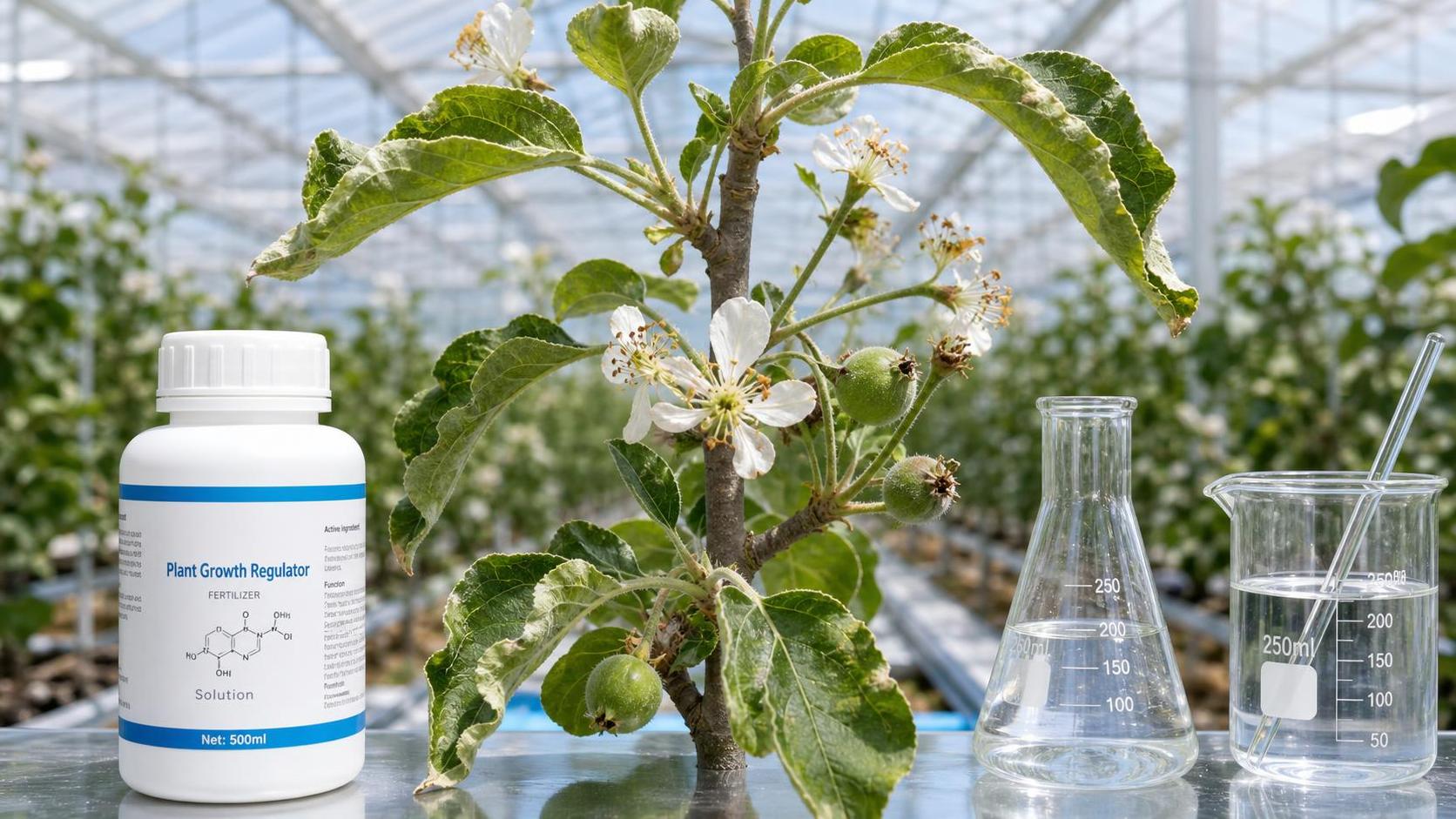
Heat stress interferes with fruit set first at the reproductive stage. Pollen viability may drop, anthers can fail to dehisce cleanly, stigmatic surfaces may dry too quickly, and the ovary often shifts into a defensive metabolic state instead of committing resources to early fruit growth. In practice, this means that even when vegetative growth still looks acceptable, flowers may abort, fertilization may remain incomplete, and newly formed fruit can shed within a short period. Plant growth regulators are used in this narrow physiological window because they can alter hormone balance at the point where the plant decides whether to retain or discard reproductive tissue.
Under high temperature, endogenous auxin, gibberellin, cytokinin, abscisic acid, and ethylene signals do not remain in the balance seen under moderate conditions. Heat commonly increases stress signaling and respiration, while carbohydrate supply to flowers becomes less reliable. A regulator does not remove the heat load itself. Its value lies in shifting the hormonal response so that flower retention, pollen tube progression, ovary growth, or early fruit sink strength is better supported during a period when the plant would otherwise favor abortion.
Where fruit set fails under heat
The most frequent operational mistake is to treat poor fruit set as a single problem. Heat injury can occur before pollination, during pollen germination, during pollen tube growth, or after fertilization when the young ovary should begin rapid cell division. The same field may show more than one failure point, especially when daytime peaks combine with warm nights, low air movement, saline irrigation water, or irregular fertigation.
At flower level, tissue dehydration may shorten stigma receptivity. Pollen grains may remain present but biologically weak. In some crops, style elongation and ovary growth become asynchronous, so the timing needed for successful fertilization narrows. After fertilization, the issue may shift toward source-sink competition: leaves continue transpiring under stress, respiration rises, and small fruit no longer receive enough assimilates to remain attached. A regulator applied without understanding this sequence can preserve floral tissue visually while still failing to improve actual marketable set.
How different regulator groups influence the process
Auxin-type materials are commonly associated with fruit set because auxin is one of the main signals that tells the plant a fertilized ovary should remain attached and begin development. When applied at the correct stage and concentration, an auxin response can reduce post-bloom drop and support ovary expansion. Under heat stress, this can partly compensate for weak pollination by maintaining the hormonal signal that usually follows successful fertilization. The risk is obvious: excessive dose or poor timing may produce misshapen fruit, overly strong sink activity in a limited number of fruit, or abnormal retention of tissues that should have been naturally thinned.
Gibberellin-type regulators may encourage fruit set and early elongation in crops where heat suppresses normal seed-driven growth signals. They are especially relevant when high temperatures reduce embryo development or pollen function. However, gibberellin responses are strongly crop- and stage-dependent. In some situations they may promote set but reduce final firmness, alter fruit shape, or extend vegetative growth at the expense of balanced reproductive development. Application decisions should therefore be tied to varietal behavior and the intended production standard rather than to a general assumption that more set is always better.
Cytokinin-type compounds are often considered when early cell division is the weak point. Heat-stressed flowers and young fruit may fail because the ovary does not establish enough metabolic demand to attract assimilates. By stimulating cell division and delaying senescence, cytokinin activity can help a young fruit become a stronger sink. This is particularly relevant when flowers appear to open normally, but early drop follows within days. Even so, cytokinin effects can vary sharply with water status, nitrogen level, and spray penetration. Tissue that is already severely heat-damaged will not be restored simply by adding a cell division signal.
Ethylene management also matters. Heat can accelerate ethylene-related senescence and abscission, especially in flowers and very young fruit. In crops prone to blossom drop, reducing stress-triggered abscission signaling may improve retention. But suppression of drop is not automatically beneficial if pollination has failed across most flowers. In that case, retention may only delay abortion and complicate canopy management. The practical objective is not cosmetic flower persistence; it is viable fruit set with normal development afterward.
Timing matters more than product category alone
The same active ingredient can produce opposite outcomes depending on whether it is applied before anthesis, during bloom, immediately after petal fall, or after the ovary has already started to enlarge. Under heat stress, this timing sensitivity becomes even sharper because the biological window shortens. A pre-bloom treatment may support flower readiness and reduce stress impact on reproductive tissues. A bloom-time application may aim at pollination support or anti-abscission action. A post-bloom spray usually targets ovary retention and early fruit growth.
Spraying too early may push tissue before it is physiologically ready, while a late application often acts on fruit that have already passed the retention decision point. In greenhouse systems, the margin for error can be small because daily temperature fluctuations are steep and canopy microclimate differs by row position, venting pattern, and irrigation schedule. Open-field orchards add another complication: one side of the canopy may enter heat stress earlier than the shaded side, so a single visual bloom estimate can be misleading.
Operators often rely on the calendar, but the more useful reference is flower stage linked to actual temperature conditions over several days. An application made ahead of a forecasted hot period may perform very differently from one made after visible flower drop begins. Once abscission layers are already active, regulators may have limited corrective value.
Formulation and spray behavior are chemical issues, not minor details
Field performance under heat is heavily influenced by formulation quality. Solubility, pH stability, compatibility with tank-mix partners, and sensitivity to hard water determine whether the active ingredient reaches the target tissue in a usable form. Some regulator chemistries hydrolyze faster outside a preferred pH range. Others show poor stability when mixed with alkaline products, calcium-rich water, or certain micronutrient solutions. Under hot conditions, spray water temperature itself can also affect dispersion and emulsion behavior.
Droplet retention becomes another limiting factor. Blossoms are difficult targets, and high temperature often coincides with rapid evaporation. Fine droplets may improve coverage but disappear too quickly in dry air; coarse droplets may survive longer but miss delicate floral structures. Non-ionic surfactants or adjuvants may improve wetting in some systems, yet excessive surfactancy can increase cuticular uptake beyond the intended level and intensify phytotoxic effects. The decision should be based on the label, the formulation type, and the crop surface, not on a standard tank recipe carried over from foliar nutrition programs.
Water volume deserves equal attention. Low-volume spraying may look efficient, but for flowers partly hidden by foliage it can reduce distribution uniformity. Very high volumes, on the other hand, may create runoff and uneven active loading. In heat, early morning or late afternoon application is often preferred because evaporation pressure is lower and stigma or ovary tissue is less stressed. Even then, leaf wetness duration, dew presence, and greenhouse condensation should be considered because they change deposition and dilution on the target surface.
Interpreting results without common misjudgments
One common misreading is to judge success from retained flowers alone. A flower that remains attached for a few extra days is not equivalent to a fruit that has completed fertilization and entered stable growth. Another misjudgment is to attribute all improvements or failures to the regulator when irrigation scheduling, root-zone oxygen, boron status, or sudden night temperature spikes changed at the same time.
Heat stress often reveals hidden management weaknesses. For example, a regulator may appear ineffective when the actual limiting factor is pollen sterility caused by persistent high night temperature. In another block, the same material may seem highly effective because the flowers were only marginally stressed and needed a slight hormonal push to remain attached. This is why small-scale strip trials and close stage recording remain valuable even in routine programs. Without that discipline, repeated use can drift into habit rather than controlled crop management.
Fruit deformity, excessive clustering, delayed coloration, irregular sizing, or pedicel retention can all signal that the hormonal push was too strong or poorly timed. These outcomes are sometimes mistaken for varietal instability or weather noise. Careful observation of treated versus untreated rows usually gives a clearer answer than broad visual impressions across a mixed field.
Integration with nutrition, irrigation, and pollination management
Regulators operate inside a physiological system; they do not replace the basics needed for fertilization and early fruit growth. Heat-stressed plants commonly face reduced calcium mobility, transient boron deficiency at the floral site, and unstable water movement through the xylem. If the root zone cycles between saturation and dryness, floral tissues may respond poorly even when the correct regulator is used. Pollination activity also matters in insect-pollinated crops. Poor pollinator movement during hot weather can make an otherwise sound spray program look inconsistent.
Balanced nitrogen is another practical issue. Excessive vegetative drive can intensify competition against flowers and young fruit, while insufficient nitrogen may limit the plant's ability to maintain reproductive growth after set. Potassium status influences osmotic adjustment and stomatal function, indirectly affecting how heat stress is expressed in the canopy. The best regulator outcome often appears when these background conditions are already kept within a narrow operating range.
Handling, storage, and movement of regulator chemicals
Because these materials act at low dose and narrow timing, handling discipline matters more than with many bulk crop inputs. Storage temperature should remain within the product specification, since repeated overheating in warehouses or containers may shorten shelf stability or alter formulation uniformity. Liquid products can stratify during transport, and some suspensions require full re-homogenization before metering. Packaging integrity is not a cosmetic concern; regulator contamination, moisture ingress, or mislabeled partial containers can create serious application errors.
Documentation should track batch identity, concentration, dilution rate, water source, tank-mix partners, field block, flower stage, and weather conditions around treatment. This level of detail is often ignored until a set problem appears and no one can reconstruct the sequence. In export-oriented chemical supply chains, label language, transport classification, and destination-country compliance documents may also influence which product form is practical to source and use. Technical suitability and regulatory suitability need to align before the material reaches the farm gate.
Choosing a regulator program under heat pressure
Selection should begin with the observed failure point: blossom retention, pollination weakness, early ovary abortion, or unstable young fruit growth. From there, the crop species, variety, cultivation system, water quality, and expected temperature pattern narrow the choice. A high-purity active ingredient with stable formulation behavior usually offers more predictable response than a poorly controlled material, especially where repeated low-dose applications are needed. Compatibility data and storage reliability are not side issues in this category; they shape the consistency of field results.
When heat events are intermittent, lighter and better-timed interventions may be preferable to aggressive rates intended to force set under every condition. When heat is persistent, a regulator may still be justified, but expectations should remain physiological rather than absolute. If pollen function has collapsed or floral organs have been structurally damaged, hormonal adjustment can only do so much. Its strongest role is in protecting the transition from flower to fruit when that transition is stressed, not completely lost.
Used with that understanding, plant growth regulator treatments become a precise chemical tool for managing fruit set under heat stress. Their effect comes from modifying hormonal signals at a vulnerable developmental stage, and their reliability depends on stage recognition, formulation behavior, environmental timing, and disciplined handling across the supply and application chain.
Send Us Your Inquiry Today
Luxi Chemical is a professional chemical product supplier with ample stock of all chemical categories and excellent quality, welcome your purchase inquiry.